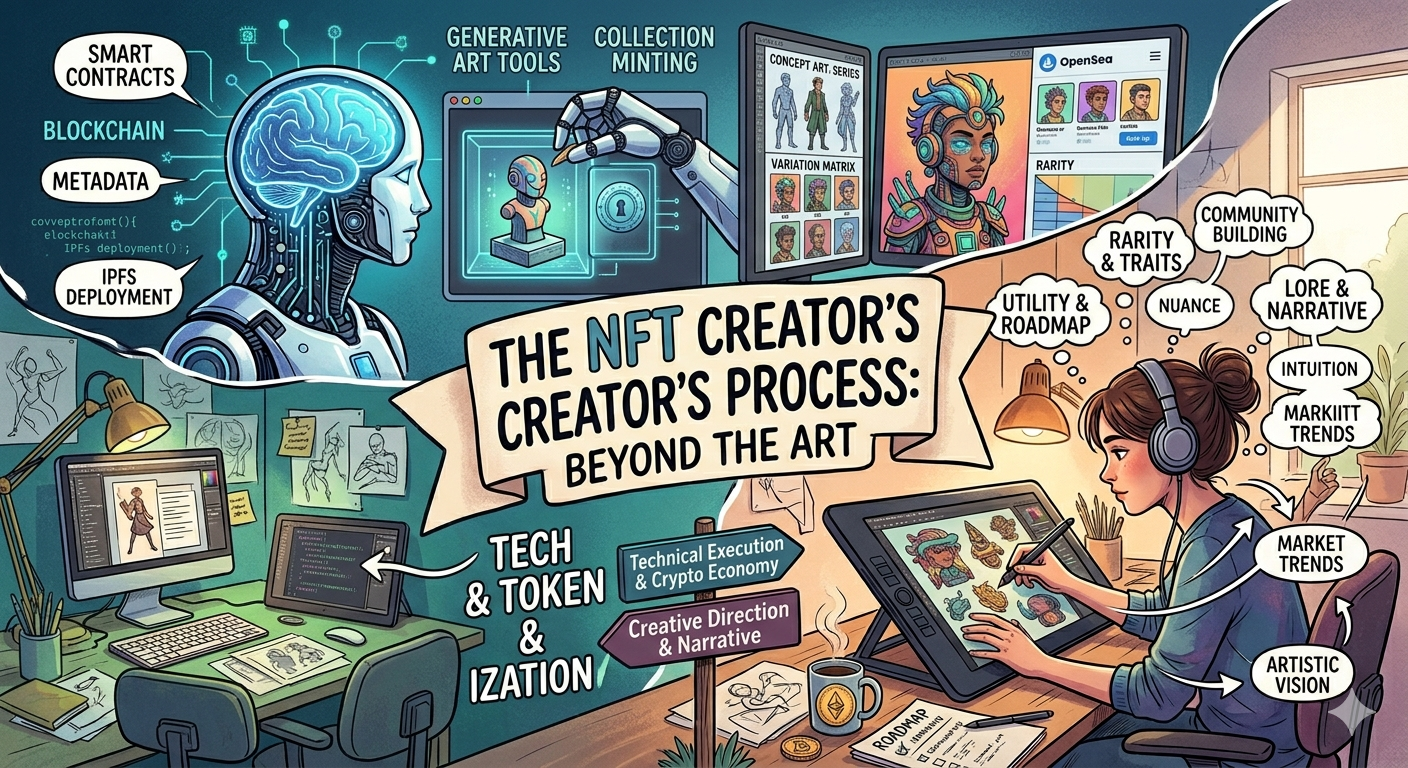
So, you want to use AI to mass-produce NFT art? Great. But let’s make sure you’re not just adding to the digital landfill. You need to stand out. You need to be different. You need to be, dare I say… unique.
This isn’t just another ‘click here, generate NFT, get rich quick’ article. I’ve tested countless AI tools, wasted a ton of ETH on gas fees minting absolute garbage, and finally cracked the code. I’m going to show you exactly how to use AI to create NFT art at scale that people actually want to buy.
The Problem: AI-Generated Genericness
The biggest issue with using AI for NFT art right now is the sheer volume of generic, uninspired content being pumped out daily. It’s a flood of similar styles, predictable compositions, and assets that scream ‘I was made by an algorithm’.
Think about it: how many AI-generated artworks feature a wolf howling at the moon? Or a cyborg with neon hair? Or a slightly altered version of the Mona Lisa?
The problem isn’t AI itself. It’s how people are using it. They’re treating it like a magic button instead of a powerful tool that requires creative direction and a healthy dose of human input.
Here’s a breakdown of the typical pitfalls:
- Lack of originality: Relying on default settings and generic prompts leads to predictable results.
- Technical limitations: Many AI tools have constraints that result in repetitive patterns or low-quality output.
- Absence of a unique artistic vision: Without a clear concept or theme, the art lacks soul and meaning.
- Over-reliance on AI: Failing to refine and enhance the AI-generated art with human skill results in a product that feels soulless and uninspired.
The Core Insight: AI as a Creative Partner, Not a Replacement
Here’s the secret sauce: AI should be your collaborator, not your boss. Think of it as a supremely talented, slightly unpredictable intern. It can do amazing things, but it needs direction, feedback, and a whole lot of editing.
The key is to inject your own artistic vision into the process. Don’t just feed the AI a generic prompt and hope for the best. Instead, use it to:
- Explore new ideas: Generate variations on a theme you already have in mind.
- Overcome creative blocks: Use AI to create unexpected compositions or color palettes.
- Automate tedious tasks: Let AI handle repetitive tasks like generating base images or applying stylistic filters.
- Enhance existing artwork: Use AI to upscale, refine, or add details to your existing creations.
I found that the best results came when I started with a strong concept, then used AI to explore different variations of that concept. Then, I spent hours manually refining and tweaking the AI-generated output to create something truly unique.
Bold statement: The future of NFT art isn’t about replacing artists with AI; it’s about empowering artists with AI.
A Step-by-Step Framework for AI-Powered NFT Art Creation
Ready to ditch the generic and create something truly special? Here’s my battle-tested framework for creating unique NFT art with AI:
Step 1: Define Your Vision.
Before you even think about touching an AI tool, spend some time brainstorming. What kind of art do you want to create? What message do you want to convey? What audience are you trying to reach? I like to start with a mood board of images that inspire me and writing a short brief for the collection.
- Target audience: Who are you trying to reach?
- Theme: What is the central idea of your collection?
- Style: What artistic style resonates with you?
- Rarity: How will you differentiate the NFTs within your collection?
Step 2: Choose the Right AI Tools.
There are a ton of AI art generators out there, and they’re not all created equal. I’ve personally tested Midjourney, DALL-E 2, Stable Diffusion, NightCafe and several others. I found that Midjourney is the most beginner-friendly, but Stable Diffusion offers more flexibility and control.
Ultimately, the best tool for you will depend on your technical skills, artistic goals, and budget. Start with a free trial or a small credit package to experiment with different options.
Step 3: Craft Powerful Prompts.
Your prompts are the key to unlocking the AI’s creative potential. Instead of generic commands like ‘a cat’, try something more specific and evocative:
- ‘A whimsical cat wearing a steampunk top hat, painted in the style of Salvador Dali.’
- ‘A cyberpunk cityscape at night, with neon lights reflecting in a rain-slicked street, photorealistic.’
- ‘An abstract portrait of a melancholic robot, using a vibrant color palette and bold brushstrokes.’
Pro-tip: Experiment with different keywords, artistic styles, and lighting conditions to see what the AI comes up with. Don’t be afraid to get weird and push the boundaries.
Step 4: Iterate and Refine.
Don’t expect to get a masterpiece on your first try. The AI will generate multiple variations of your prompt, and you’ll need to carefully select the ones that resonate with you. Then, use image editing software like Photoshop or GIMP to refine the details, adjust the colors, and add your own personal touch.
I often use AI to create a base image, then spend hours manually painting over it, adding details, and tweaking the composition.
Step 5: Create a Unique Rarity System.
Once you have a collection of high-quality AI-generated artworks, it’s time to create a rarity system. This is how you’ll differentiate the NFTs within your collection and make some more valuable than others.
Here are some ideas:
- Traits: Assign different traits to your NFTs (e.g., background color, clothing, accessories) and make some traits rarer than others.
- Editions: Create limited-edition versions of your most popular artworks.
- Animations: Add subtle animations or interactive elements to some of your NFTs.
The key is to be creative and think outside the box. What unique elements can you add to your NFTs to make them stand out from the crowd?
Real-World Examples: AI NFT Success Stories
While the space is still emerging, there are already some notable examples of artists and projects that are successfully using AI to create unique NFT art.
- Refik Anadol: Known for his mesmerizing data sculptures, Anadol uses AI to transform real-time data into stunning visual experiences. His NFTs often sell for hundreds of thousands of dollars.
- Claire Silver: An AI artist who collaborates with machine learning models to create surreal and thought-provoking artworks. Her pieces explore themes of identity, technology, and the future of art.
- beeple: While not exclusively AI-driven, Beeple has used AI tools to enhance his workflow and create more complex and detailed artworks. His ‘Everydays: The First 5000 Days’ NFT sold for $69 million.
These examples demonstrate that AI can be a powerful tool for creating valuable and engaging NFT art. However, it’s important to remember that these artists are not simply relying on AI to do all the work. They’re using it as a tool to enhance their own creative vision and create something truly unique.
Mistakes to Avoid: The AI Art Graveyard
I’ve seen a lot of AI-generated NFT projects fail. Miserably. Here’s what not to do:
- Don’t be a copycat: Don’t try to replicate existing NFT projects or trends. Aim for originality and create something that’s truly your own.
- Don’t neglect the art: The AI is just a tool. The art itself still needs to be high-quality and visually appealing. Make sure to refine and enhance the AI-generated output with your own skills and expertise.
- Don’t forget the community: Building a strong community is essential for the success of any NFT project. Engage with your audience, listen to their feedback, and create a sense of belonging.
- Don’t overpromise and underdeliver: Be realistic about what you can achieve and avoid making exaggerated claims about the value of your NFTs.
- Don’t ignore the legal aspects: Make sure you understand the copyright and intellectual property implications of using AI-generated art for commercial purposes.
Advanced Insights: Level Up Your AI NFT Game
Want to take your AI NFT art to the next level? Here are some advanced techniques to consider:
- Fine-tuning: Fine-tune a pre-trained AI model on your own dataset of images to create a custom AI art generator that reflects your unique style.
- Generative Adversarial Networks (GANs): Use GANs to create highly realistic and detailed AI-generated artworks.
- Interactive NFTs: Create NFTs that respond to user input or environmental data.
- AI-Powered Curation: Use AI to curate and manage your NFT collection, automatically identifying the most valuable and engaging pieces.
- Cross-chain functionality: Consider deploying your NFTs on multiple blockchains to reach a wider audience and increase liquidity.
Monetization Angle: Beyond the Initial Sale
Selling your NFTs on a marketplace like OpenSea or Rarible is just the beginning. Here are some other ways to monetize your AI-generated NFT art:
- Royalties: Earn a percentage of every resale of your NFTs.
- Staking: Allow NFT holders to stake their NFTs and earn rewards.
- Licensing: License your AI-generated art to businesses or individuals for commercial use.
- Merchandise: Create physical merchandise featuring your AI-generated art.
- Metaverse Integration: Integrate your NFTs into virtual worlds and metaverse platforms.
Remember, the key to long-term success is to create a sustainable business model that goes beyond the initial sale of your NFTs.
Future Trends: AI Art in 2026 and Beyond
Looking ahead to 2026, I predict that AI will become even more deeply integrated into the art world. We’ll see:
- More sophisticated AI tools: AI art generators will become even more powerful and user-friendly, allowing artists to create increasingly complex and detailed artworks.
- Personalized AI art: AI will be used to create personalized art experiences tailored to individual tastes and preferences.
- AI-powered art curation: AI will play a greater role in curating and managing art collections, both online and in physical galleries.
- AI artists: We may even see the emergence of AI artists who are recognized as legitimate creators in their own right.
- Regulation: As AI art becomes more prevalent, governments and regulatory bodies may begin to establish guidelines and regulations to address issues such as copyright and ownership.
The possibilities are endless. The future of art is undoubtedly intertwined with AI, and I’m excited to see what the next few years will bring.
Here are 5 actionable tips to create unique NFTs:
::: boxed
- Fine-tune existing AI models with your artwork.
- Use multiple AI tools in your NFT generation process.
- Incorporate real-world data for unique attributes.
- Create interactive NFT experiences with user input.
- Build a strong community and involve them in the project.
:::
Here is a short checklist to ensure your AI generated NFTs stand out:
- [ ] Define a unique artistic vision
- [ ] Select powerful AI tools and learn how to use them effectively
- [ ] Craft specific and evocative prompts
- [ ] Iterate and refine the results
- [ ] Establish a unique rarity system
- [ ] Build a strong community and engage with the audience
Here’s a handy table comparing different prompt types:
| Prompt Type | Description | Example | Tips |
|—|—|—|—|
| Basic | Simple, straightforward command. | | Good for initial exploration. |
| Descriptive | Includes detailed descriptions of the subject, style, and setting. | | Use rich vocabulary and sensory details. |
| Stylistic | Specifies a particular artistic style or movement. | | Research different styles and their key characteristics. |
| Emotional | Conveys a particular mood or emotion. | | Use emotionally charged words and imagery. |
| Abstract | Focuses on abstract concepts and visual elements. | | Experiment with non-representational forms and textures. |
FAQ: Your Burning Questions Answered
Q: Can I really make money selling AI-generated NFTs?
A: Yes, but it takes work. The NFT space is competitive, so you’ll need to create high-quality art, build a strong community, and market your NFTs effectively.
Q: What are the legal implications of using AI-generated art?
A: The legal landscape is still evolving, but it’s important to understand the copyright and intellectual property implications of using AI-generated art for commercial purposes. Consult with a lawyer if you have any concerns.
Q: Which AI art generator is the best?
A: It depends on your needs and preferences. I recommend trying out a few different options and seeing which one works best for you.
Q: How important is it to have a unique artistic vision?
A: Extremely important. AI is just a tool. Your artistic vision is what will set your NFTs apart from the crowd.
Q: How do I build a community around my NFT project?
A: Engage with your audience on social media, participate in relevant online communities, and create a sense of belonging.
Q: How much does it cost to mint an NFT?
A: The cost of minting an NFT varies depending on the blockchain you’re using and the current gas fees. Ethereum gas fees can be quite high, so consider using a Layer 2 solution or a more affordable blockchain like Polygon or Solana.
SEO Information:
SEO Title (max 60 chars): AI NFT Art: Mass Produce Unique Designs
Meta Description (max 155 chars): Learn how to use AI to mass-produce unique and captivating NFT art. Avoid generic designs and stand out in the crowded NFT market. This is your guide.
SEO Tags: AI art, NFT art, generative art, AI NFT, NFT creation, digital art, artifical intelligence, mass produce, how to make NFTs, crypto art
Internal Linking Suggestions:
- Anchor Text: NFT Marketplace
Topic: Platforms where you can sell and trade NFTs. - Anchor Text: Minting NFTs
Topic: A deep dive into the process of creating NFTs. - Anchor Text: Crypto Wallet
Topic: How to setup a wallet to store ETH to purchase NFTs.
Conclusion: Embrace the AI Revolution, Responsibly
AI is revolutionizing the art world, and NFTs are providing a new way for artists to connect with their audience and monetize their creations. By combining the power of AI with your own artistic vision, you can create truly unique and captivating NFT art that stands out from the crowd.
Don’t be afraid to experiment, push boundaries, and embrace the unexpected. The future of art is here, and it’s waiting for you to explore it. Now go, create something amazing!